Notes for Sunday 22 February 2026

Dear friends, The picture today is of our old Ford Ranger. Bought in 2008 and well-maintained it has come to the end of its working life. The ECO story behind it is that even though it was a gas guzzling…

St John and St Margaret's - a Christian presence in the Capel and Ockley communities
St John and St Margaret's - a Christian presence in the Capel and Ockley communities
Dear friends, The picture today is of our old Ford Ranger. Bought in 2008 and well-maintained it has come to the end of its working life. The ECO story behind it is that even though it was a gas guzzling…

Both our churches have been registered ECO churches for a few years now. We hold a bronze award and are on a journey to achieve silver. A start has been made recently to survey the wildlife in St John’s churchyard…

Want to buy organic but find it’s too expensive? Consider buying organicfor the fruits and veg below. When not grown organically,this ‘dirty dozen’has some of the of the highest concentrations of chemicals. – Apples– Strawberries– Grapes– Celery– Peaches– Spinach– Sweet…
5 tips for reducing your carbon footprint: 1. *Dial it down*. Moving your thermostat down in winter and up insummer could save about 2,000 pounds of carbon dioxide per year.2. *Turn it off. *Make it a habit to turn off…
Using water efficiently means that we can reduce the amount of water being taking out of our rivers and aquifers, especially as demands are rising. This helps protect our water resources and the wildlife that live there. Here are a…
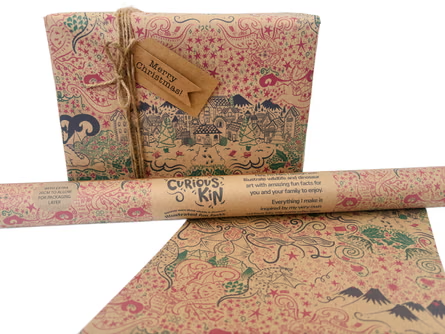
Did you know that lots of wrapping paper we use can’t go into our recycling bins? This is particularly true of paper with foil or glitter decorations. Try recyclable or biodegradable wrapping paper this Christmas. Or why not try good…

The Autumn and Winter months are the most important months for hedgehogs to find sufficient food to put on enough weight before hibernation. So always make sure to put out food at this time of year. (Typically hedgehogs hibernate from…
This Christmas, why not choose a charity gift from Christian Aid to give to your loved ones. It will bring a smile to their face and to someone further afield who needs a little bit of help from a friend.…
The best way of making our oceans plastic-free is by not letting the rubbish get there in the first place. One source of plastic is milk containers. Even though these are recyclable, evidence suggests that this only happens with a small…
Most banks have no rules as to who they deal with and what projects they fund as long as it is legal. There are a few that have higher standards. Look up your bank in the list and see how…